
Have you ever struggled with the unpredictability of flash, wrestled with inconsistent natural light, or wished you could see exactly how your lighting would look before you press the shutter button? If so, you're ready to discover the power and creative freedom of continuous lighting.
Unlike flash or strobes that produce a brief, powerful burst, continuous lights stay on, providing a constant, steady stream of illumination. Think of it as having a portable sun with a dimmer switch—it's reliable, intuitive, and gives you the power to shape shadows and highlights in real-time. Let's dive into why this lighting style is a game-changer for modern creators.

What is Continuous Lighting? The WYSIWYG Advantage
The core principle of continuous lighting is simple: What You See Is What You Get (WYSIWYG).
Because the light is always on, you can see the immediate effect of every adjustment you make. When you move a light, change its angle, or add a modifier, you see the shadows soften and the highlights shift live through your camera's viewfinder or on its screen.
This real-time feedback loop removes the guesswork often associated with flash photography. It allows for faster experimentation, more intuitive adjustments, and fewer surprises in post-production, making it an indispensable tool for both beginners and seasoned professionals.


Continuous Lighting vs. Strobe (Flash): The Key Differences
While both light your subject, they operate very differently. Understanding their pros and cons is key to choosing the right tool for the job.
Continuous Light:
- Best for Video: It provides a constant, flicker-free light source essential for videography.
- Beginner-Friendly: The WYSIWYG nature makes it incredibly easy to learn.
- Real-Time Adjustments: Perfect for crafting a scene with precision.
Strobe/Flash:
- Freezes Motion: The short, intense burst is excellent for freezing fast-moving subjects.
- High Power Output: Delivers immense power to overpower the sun or light large scenes.
- Learning Curve: Requires test shots and light meters to see the final result.
- Photo-Only: The flash burst is unusable for video recording.
For hybrid creators who shoot both photos and videos—like wedding photographers, documentary filmmakers, and social media influencers—continuous lighting is the clear winner for its versatility.
Top 3 Benefits of Using Continuous Lighting
- Unmatched Versatility for Hybrid Creators In a world where creators wear multiple hats, continuous lighting is the ultimate multi-tool. You can seamlessly switch from shooting a cinematic video interview to capturing a stunning portrait without ever changing your lighting setup.
- A Streamlined Post-Production Workflow Consistency is king in editing. Continuous light ensures every clip in your video is lit uniformly, dramatically cutting down the time you spend on color correction and exposure adjustments. For photographers, it means the image you capture looks exactly like the scene you composed, saving valuable time that can be spent on creative edits rather than corrective ones.
- An Intuitive and Forgiving Learning Process The immediate visual feedback makes continuous lighting the best choice for anyone learning about light. You build an intuitive understanding of how angles, distance, and modifiers affect a subject, accelerating your growth as a visual artist.


- Regular price
- Sale price
- from $1,039.35
6 Essential Tips for Mastering Continuous Lighting
Ready to get started? Here are some practical tips to help you master the craft.
- Experiment with Angles and Positions: Use the live view to your advantage. Move your studio lights around—place them high, low, to the side, or behind your subject—and watch how the mood and dimension of your shot instantly change.
- Control Your Shadows: Shadows create depth. Move your light closer to soften shadows for a beauty shot, or pull it farther away to create harder, more dramatic shadows.
- Mix with Natural Light: Don't be afraid to use continuous light as a "fill" to soften shadows created by a window or the sun. This creates a balanced, professional look, especially during golden hour.
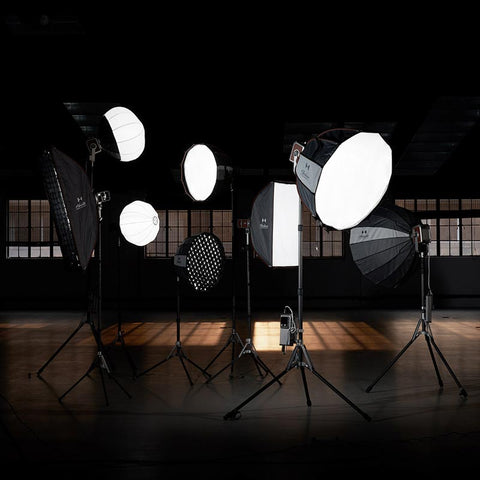
- Use Light Modifiers: Modifiers are essential for shaping light. Use softboxes and diffusers to create soft, even light, or use reflectors to bounce light back into the shadows.
- Adjust Intensity & Color Temperature: Modern LED continuous lights allow you to dim the intensity and change the color temperature from warm to cool. Use this to match ambient light or create a specific mood for your scene.
- Practice and Experiment: The best way to learn is by doing. Set up different scenes, use different subjects, and don't be afraid to break the rules. The more you practice, the more second-nature it will become.

Your Creative Future is Bright
Continuous lighting is more than a tool; it's a catalyst for creativity. It removes technical barriers and empowers you to focus on what truly matters: your artistic vision. By providing instant feedback and incredible versatility, it allows you to craft your image in the moment, not just capture it.
With innovative and portable tools like those from Harlowe at your disposal, the possibilities are endless. Embrace the light, experiment with your vision, and let your creativity shine.


