
After the holidays, we often want fresh, cozy indoor photos, but our usual home setups feel off. Shadows are bizarre, skin tones sometimes look dull, and backgrounds feel cluttered. We’ve been there. The big question we kept asking ourselves was: should we stick with an LED panel or switch to a softbox setup?
Both can yield excellent results, but which one fits your space and workflow best? In this guide, we'll walk you through our personal expertise, what we’ve learned, and the setups that work for small home studios and confined indoor spaces.
Understanding Indoor Lighting Challenges
Indoor photography is tricky, even for seasoned creators. Light bounces unpredictably, rooms are small, and often multiple light sources clash. We’ve noticed three recurring problems in our shoots:
- Light Quality: sometimes harsh, sometimes too dim, rarely just right.
- Consistency: skin tones that change from one shot to another.
- Control: light spilling on walls or surfaces we didn’t plan for.
LED panels and softboxes tackle these challenges differently, so knowing their strengths is key.
What Are LED Light Panels? Pros, Cons, and Best Uses

LED light panels are the “plug in, dial it in, and start shooting” solution, especially when you need clean, consistent indoor lighting without a bulky setup.
How LED Light Panels Work Indoors
LED panel lights are slim, flat fixtures (often rectangular or round) that are usually adjustable for brightness and color temperature. They’re continuous, so we can see changes in real time, which is especially handy for video or quick photos.
Advantages of LED Light Panels
We love LED panels for small setups. They’re lightweight, easy to mount on desks or tripods, and setup is instant: turn on, dial in brightness, and shoot. Many even run on batteries, perfect when outlets are scarce. If you’re juggling video and photo content, panels are quick, portable, and forgiving.
Limitations of LED Light Panels Indoors
The downside? Small panels can produce sharp shadows. On reflective surfaces or shiny products, highlights can look harsh. Like our workaround, just clip a small diffuser or even a white curtain in front. It softens the light immediately without needing a big softbox.
If you’re working in a tight space or bouncing between photo and video, LED panels are hard to beat. Just add a quick diffuser when you want softer, more flattering light.
What Is Softbox Lighting? Pros, Cons, And Best Uses

Softbox lighting is what you reach for when you want that instantly “finished” look indoors: soft shadows, smooth highlights, and flattering light that makes people and products look their best.
How Softboxes Shape Light
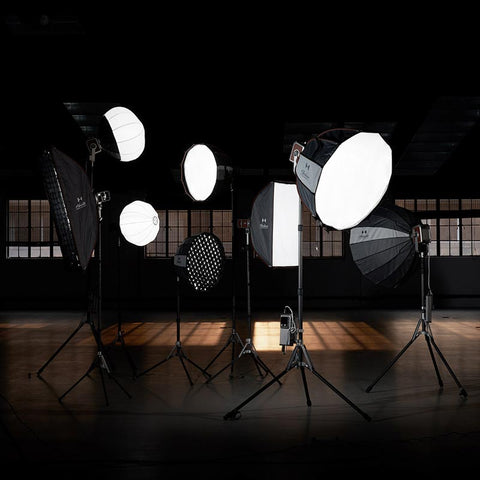
Softboxes aren’t lights themselves; they’re more like modifiers. They enlarge your light source, diffuse it, and direct it precisely. We use softboxes with both continuous LEDs and strobes. The result is smooth, flattering light with less post-editing.
Advantages of Softbox Lighting Indoors
Softboxes are our go-to for portraits. Shadows are gentle, skin looks natural, and products get a clean gradient. We can also easily control spill, which is a lifesaver in small rooms where walls often reflect unwanted light.
Limitations of Softbox Lighting Indoors
They’re bulkier, and some softboxes take a minute or two to assemble, but compact options (like magnetic or quick-release designs) set up fast. In tight spaces, we sometimes prefer a compact LED panel for speed. But when we have a room, the softbox’s quality is unmatched.
They take a bit more space and setup, but if you’re chasing the most natural, polished indoor light, a softbox is usually the fastest way to get there.
LED Panels vs Softbox Lighting: Use-Case Comparison
Choosing between LED panels and a softbox comes down to what you shoot, how much space you have, and how “soft” you want your light to feel on skin and products.
Light Quality and Softness
Softness is all about size relative to your subject. Panels can be more directional unless diffused, while softboxes naturally spread the light. Rectangular vs octagonal shapes make a subtle but noticeable difference in shadows and catchlights.
Color Accuracy and Flicker
CRI and TLCI ratings matter. Modern LED panels and softboxes give consistent skin tones and colors, and flicker-free models make video easier. We constantly check the color before a shoot, which saves editing headaches.
Setup, Space, and Portability
Small rooms? Panels are compact and easy to move. Home studios with some breathing room? A softbox feels luxurious, giving flattering light across portraits or products. If you move locations often, portability becomes the deciding factor.
Budget and Upgrade Path
Panels are cheaper initially. But a smart upgrade path is to use both: a softbox for key light and an LED panel as fill, or to add reflectors. This way, you don’t overinvest and can gradually grow your setup.
If you want the safest, most flattering baseline, start with a softbox, then add LED panels or reflectors as your setup (and shoots) scale.
How to Choose the Right Option for Your Indoor Setup
Choosing between a softbox and an LED panel comes down to one thing: what you’re shooting, where you’re shooting it, and how fast you need to get set up.
Start With Your Subject
Softboxes win for portraits and people, where their faces look great, and their eyes catch light naturally. For products or flat-lays, both diffused panels and softboxes work, depending on the reflections. For hybrid setups, video, Zoom calls, photos, and LED panels are fast, flexible, and convenient.
Evaluate Your Space and Workflow
Tiny spaces? Compact panels or collapsible softboxes save frustration. Dedicated corners? Softboxes become the primary key, with a panel for fill or accent. Frequent setups? Speed often matters as much as light quality.
Decide Based on How You Shoot (Not Just What You Shoot)
If you shoot on a tripod, softboxes give the classic studio look. For handheld, quick content capture, panels are better. Video creators especially benefit from continuous LED lighting with real-time feedback, while softboxes shine in polished photo shoots.
Pick the tool that matches your real workflow, because the “best” light isn’t the fanciest one; it’s the one you’ll actually use consistently (and use well).
So Which One Gives You Better Photos Indoors?
If you’re upgrading your indoor setup, keep it simple: choose one key light, move it closer than you think, and control your shadows with angle and diffusion before you touch camera settings. Once you can repeat a clean look every time, then a second light actually becomes a real upgrade (not extra clutter).
To get started with a setup that fits your space and workflow, shop Harlowe’s lighting collection today.


