

Photography, authorship, and the ethics of seeing
Roshni Khatri’s photography begins with a question that many photographers never pause to ask: Who does an image belong to once it is made?
In an era saturated with pictures, where the act of photographing has become almost reflexive, Khatri approaches the camera with unusual deliberateness. For her, photography is not simply about witnessing the world. It is about responsibility, to the subject, to the story, and to the consequences that follow once an image circulates beyond the moment in which it was created. Her work also reflects key principles of photojournalism lighting, where light must support truth rather than manipulate it.
This sense of responsibility defines both her work and her path into photography.

Becoming a Photographer
Khatri discovered photography early, long before it appeared to be a viable profession. As a student, she was simply drawn to the camera. She photographed school events, gardens, everyday life, anything that seemed visually alive. Over time she became known as the person who always had a camera, the one responsible for documenting moments others might overlook.
What began as curiosity gradually became identity.
Growing up in India, however, photography did not present itself as an obvious career path. Professions like medicine, law, or engineering carried the weight of stability and social approval. Photography did not. The idea of building a life around images required both conviction and persistence, particularly as a woman entering a field that historically expected men to be behind the camera.
Khatri pursued it anyway.
Her education unfolded through a mixture of formal study and practical experience. She studied mass communication in Delhi while building her photographic practice independently, taking assignments where she could find them, photographing weddings, and learning through work rather than institutional training. The process was gradual but decisive. Each project reinforced the same realization: photography was not simply something she enjoyed doing. It was how she understood the world.

Perspective and Responsibility
Khatri’s work is often discussed in the context of representation, but the word carries deeper meaning in her practice than it typically does in industry discourse.
Representation, in her view, is not simply about who holds the camera. It is about perspective, about the cultural awareness and ethical sensitivity that shape how a story is told.
Two photographers can stand in the same place and photograph the same scene. The images will not be the same. Perspective determines what is emphasized, what is omitted, and how the subject is understood. That difference becomes especially important when photographers work within communities whose lives may already be subject to misinterpretation or simplification.
For Khatri, the responsibility of the photographer extends beyond composition or timing. It includes a consideration of how the image may affect the person being photographed long after the photographer has left.
Images persist. They circulate. They acquire meaning in contexts the photographer cannot control. That reality requires a level of awareness that goes beyond technical skill.
It requires judgment.

Photography Without Extraction
Many photographers describe their work in terms of capturing or taking images. Khatri is cautious about this language. She is acutely aware that photography can easily slip into a form of extraction, an act where a moment is taken from someone’s life and transformed into an image that primarily benefits the photographer.
Her approach is intentionally different.
Whenever possible, she sees photography as a collaborative act. The person in the frame is not simply a subject; they are part of the process that creates the image. A photograph may still be spontaneous, but the relationship between photographer and subject remains central.
This awareness shapes how she works in documentary contexts, particularly when photographing communities whose stories have historically been told by outsiders. Cultural nuance, trust, and consent become part of the photographic process.
The aim is not to remove the photographer from the story, every photograph inevitably reflects the perspective of the person behind the camera, but to ensure that the image does not erase the agency of the person within it.
This approach aligns closely with documentary and photojournalism practices, where ethical lighting plays a role in preserving dignity and accuracy.

Light as Language
If photography is the act of writing with light, then lighting becomes one of the photographer’s most powerful narrative tools.
Khatri approaches lighting as an expressive language rather than a purely technical concern. The direction, softness, and intensity of light can dramatically alter how a viewer interprets a person or scene. A portrait lit with soft, directional light may suggest intimacy or reflection. Hard light and strong shadows can introduce tension or energy. The choice is never neutral.
Lighting determines mood. It shapes how the viewer feels about the subject.
In documentary and editorial contexts, this control becomes particularly meaningful. A photographer decides how much of the subject’s world remains visible and how much recedes into shadow. That balance can either reinforce dignity or undermine it.
For Khatri, the role of lighting is not to overpower the scene but to support the emotional truth of the story being told.
In photojournalism lighting, these choices become even more critical, as light can influence how truth and reality are perceived.

Why Tools Matter
Photographers who think carefully about light also tend to think carefully about their tools.
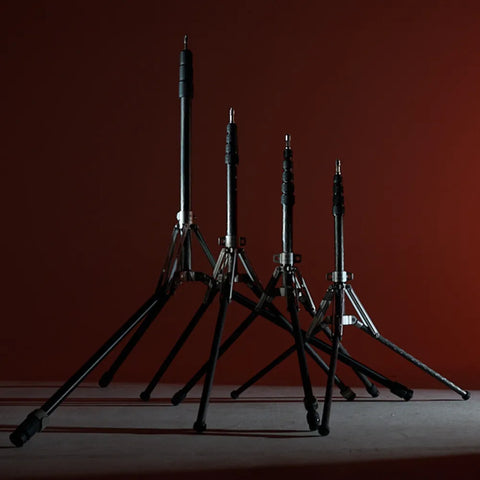
The appeal of Harlowe lighting systems, for photographers like Khatri, lies in the balance between portability and control. Documentary and editorial work often requires mobility, moving quickly through environments where traditional studio setups would be impractical. Compact lighting tools allow photographers to shape light without disrupting the natural rhythm of a location.


- regulärer Preis
- Verkaufspreis
- Von $519.35
Equally important is the ability to see the effect of the light in real time. Continuous LED lighting allows the photographer to adjust direction, intensity, and shadow immediately, refining the mood of the image before the shutter is released.
This responsiveness supports the kind of intentional lighting Khatri favors: light that enhances the story rather than overwhelming it.
In this sense, the equipment becomes an extension of the photographer’s perception. It allows subtle adjustments that preserve authenticity while still shaping the image with care.

The Power of Being Seen
Despite the global reach of photography today, Khatri remains attentive to the intimate impact a photograph can have on an individual's life.
For some people, being photographed seriously, being treated as someone worthy of visual attention, is itself meaningful. It affirms presence. It records a moment of existence that might otherwise disappear into the ordinary passage of time.
This awareness informs the humility with which Khatri approaches her work. The camera carries influence, but it also carries obligation. The people in the photograph must remain more important than the photograph itself.
That principle continues to guide her practice.
In a medium increasingly defined by speed and volume, Khatri’s work moves in a different direction. It favors thoughtfulness over immediacy and responsibility over spectacle. Her photographs are not only records of moments. They are considered acts of seeing, images made with the understanding that light can illuminate more than a subject.
It can reveal how the photographer chooses to see the world.
All photography by Roshni Khatri.
FAQ: Photojournalism Lighting and Ethics
What is photojournalism lighting?
Photojournalism lighting focuses on using light in a way that preserves the authenticity and truth of a real-world moment.
Should photojournalists use artificial lighting?
Artificial lighting can be used, but it should never alter the reality of the scene or mislead the viewer.
Why is lighting important in documentary photography?
Lighting shapes how a subject is perceived and can influence the emotional and ethical impact of an image.


